

For most adults with a new fever, a family doctor or general physician is the right starting point, not a specialist. The decision changes when the fever is severe, lasts beyond three days, returns after improving, affects a higher-risk person, or comes with signs of organ stress; you will be able to match those situations to clinic, specialist, or hospital care.
Key takeaways
- Start with a family doctor for an uncomplicated adult fever.
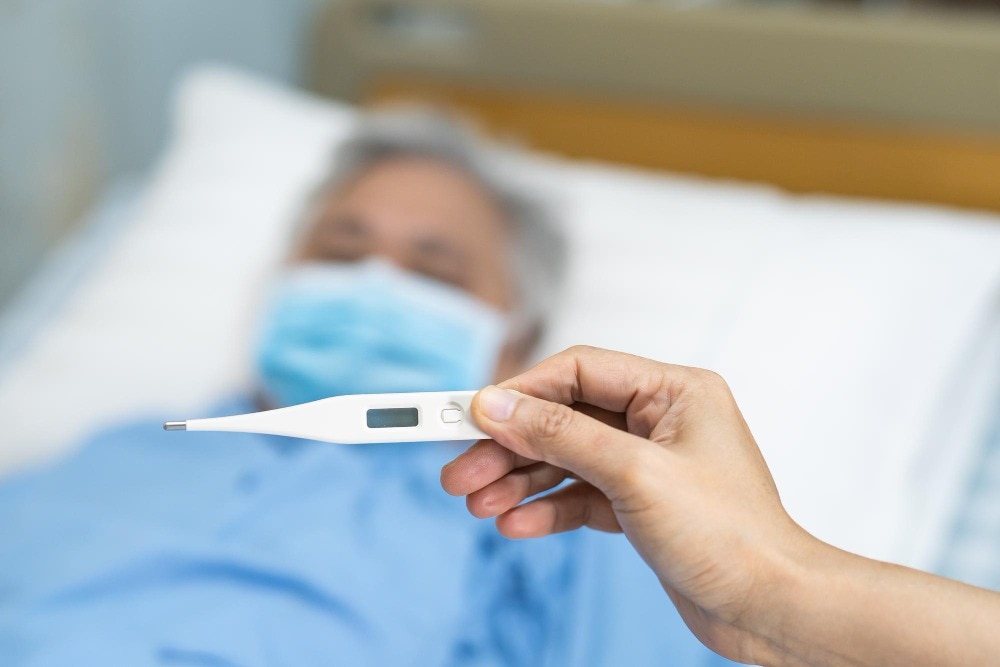
- Treat 38°C or higher as a fever and record repeated readings.
- Go to a hospital for severe breathing, confusion, dehydration, or worsening symptoms.
- Take temperature records, medicines, travel details, and mosquito exposure notes.
Which doctor should an adult with fever see first?
A measured temperature of 38°C or higher is a fever, but the number alone cannot identify a viral, bacterial, mosquito-borne, inflammatory, or medication-related cause. For an uncomplicated adult fever, start with a family doctor or general physician.
| Doctor or service | Practical role | When to choose it |
|---|---|---|
| Family doctor or general physician | Examines common illnesses, orders initial tests, treats routine causes, and arranges referral | Fever with cough, sore throat, urinary symptoms, gastroenteritis, or a straightforward respiratory infection |
| Internal-medicine doctor | Evaluates adult conditions in greater depth and coordinates complex medical assessment | Multiple illnesses, abnormal initial tests, or a complicated medical history |
| Fever specialist doctor | Usually a physician experienced in assessing unexplained fever, not a separate primary-care qualification | Persistent, recurrent, unusual, or treatment-resistant fever |
| Infectious-disease specialist | Focuses on difficult infections and exposure-related illness | Major travel or healthcare exposure, immune suppression, severe or recurring fever, or organ dysfunction |
| Emergency department | Provides rapid stabilisation, testing, observation, and urgent referral | When immediate safety matters more than a routine consultation |
A fever specialist doctor or family doctor in Pune is therefore usually a choice between first-line assessment and later specialist review, not two equivalent starting points. Search terms such as general physician near me or physician clinic near me improve access, but verify the doctor’s name and registration on the relevant medical register.
Go to an emergency department for difficulty breathing, chest pain, confusion, fainting, seizure, stiff neck, blue lips, severe dehydration, persistent vomiting, or a temperature around 40°C or higher. Fever with major immune suppression also needs urgent medical assessment.
When does fever need a hospital instead of a clinic appointment?
A stable adult with a mild, short-lived fever can usually visit a nearby clinic during daytime. Choose a hospital instead when symptoms are severe, worsening, travel would delay care, or urgent tests and observation are needed.
| Option | Choose it when | What should be available |
|---|---|---|
| Clinic | You are alert, breathing comfortably, keeping fluids down, and can travel safely | Vital signs, examination, basic sample collection, and referral |
| Hospital | Symptoms are escalating, it is late, or clinic travel would delay care | Urgent laboratory testing, imaging, observation, treatment, and referral |
Seek immediate hospital assessment for:
- Difficulty breathing, chest pain, blue lips, mottled skin, confusion, fainting, a seizure, or a stiff neck
- Severe dehydration, persistent vomiting, inability to keep fluids down, or markedly reduced urine
- Very low blood pressure, rapidly worsening illness, or a temperature around 40°C or higher
These signs can indicate sepsis or another emergency even when the temperature is lower. Do not wait for a routine appointment if the person cannot travel without assistance.
Arrange medical assessment when fever lasts more than three days, returns after improving, or comes with worsening pain, weakness, breathlessness, rash, or reduced alertness. Pregnant adults, older adults, people with major immune suppression, and those with significant heart, lung, kidney, or liver disease should seek advice earlier.
If searching for a general physician near me in Pune, use a clinic only when it can assess and refer safely; the choice is not between a fever specialist doctor or family doctor in Pune when emergency signs are present.
What should you measure and take to the appointment?
A useful fever record replaces “I have had fever for a few days” with measurements, timing, symptoms, and exposures.
1. Use a working digital thermometer and follow its instructions. Record the exact temperature, date, time, and body site: oral, armpit, ear, and rectal readings are not interchangeable.
2. Note whether each reading followed paracetamol, a bath, exercise, or a hot or cold drink. Record the onset date, whether fever is continuous or episodic, and any chills or sweating.
3. List associated symptoms: cough, breathlessness, headache, rash, abdominal pain, diarrhoea, urinary burning, vomiting, or bleeding. Write down every medicine taken, including its dose and time, antibiotics, painkillers, combination cold medicines, supplements, and leftover prescriptions.
4. Tell the doctor about recent travel, mosquito or animal exposure, sick contacts, procedures or hospitalisation, chronic illnesses, pregnancy status, immune-suppressing treatment, and allergies. Do not omit a past travel or hospital exposure because it seems unrelated.
5. Bring test reports, medicine strips or prescriptions, and the thermometer history if available. These details help a fever specialist doctor or general physician decide whether you need examination, blood tests, urine testing, imaging, or urgent referral.
Which tests and treatments help identify the cause in Pune?
Choose tests from the illness pattern, examination, exposure history, and day of illness—not from an indiscriminate “fever panel.” In Pune, disclose mosquito exposure, travel, residence in a malaria-risk area, and the date symptoms began. Dengue and malaria cannot be diagnosed reliably from fever alone.
| Test | Main question | Important limitation |
|---|---|---|
| Complete blood count | Are white cells, platelets, or haemoglobin abnormal? | An abnormal CBC does not identify the cause; an early normal result does not exclude disease |
| Urine test | Is a urinary infection or kidney-related problem likely? | It does not assess respiratory or mosquito-borne illness |
| Chest imaging | Is pneumonia or another chest problem present? | The choice depends on symptoms and examination |
| Dengue or malaria test | Is a mosquito-borne infection supported? | Timing affects accuracy; suspected malaria needs prompt testing |
| Blood cultures | Is bacteria growing in the bloodstream? | Results take time and do not replace examination |
If dengue is possible, avoid aspirin and non-steroidal anti-inflammatory drugs such as ibuprofen unless a clinician directs otherwise. Paracetamol is commonly used for relief; follow the product dose limit and avoid duplicate paracetamol-containing medicines. Do not start antibiotics solely because the fever is high.
Seek urgent review for:
- Abdominal pain or persistent vomiting
- Bleeding, lethargy, or restlessness
- Breathing difficulty
A physician clinic near me is useful only if it provides examination, vital signs, and sample collection. For the choice between a fever specialist doctor or family doctor in Pune, Dr Masal Hospital 08042755436 may be considered; confirm tests, hours, and emergency arrangements before travelling.
Related service
General Physician & Family Doctor Looking for a trusted General Physician in Pune for complete family healthcare? Dr Masal Hospital is known for reliable diagnosis, ethical treatment,... View service → |
When does a short fever become a specialist evaluation?
A short fever becomes a specialist evaluation when it persists despite appropriate care, returns without an explanation, or follows significant travel or healthcare exposure. Refer for infectious-disease or complex internal-medicine review when immune suppression or organ dysfunction adds risk.
| Option | Best next step | When it applies |
|---|---|---|
| Family doctor or general physician | Examine, order initial tests, treat common causes | Stable, new fever with cough, sore throat, urinary symptoms, or gastroenteritis |
| Fever specialist doctor | Arrange structured reassessment | Persistent, recurrent, severe, treatment-resistant, or medically unusual fever |
| Infectious-disease or internal-medicine specialist | Investigate complex causes | Unexplained fever after travel, hospital exposure, immune suppression, or organ dysfunction |
| Emergency department | Provide immediate stabilisation | Confusion, severe breathlessness, fainting, seizure, blue lips, severe dehydration, or rapidly worsening illness |
For most stable adults, a family doctor remains the right first choice. Searching for a general physician near me can improve access, but do not keep changing antibiotics or other medicines without reassessing the source; treatment changes can hide the clinical pattern and delay diagnosis.
“Fever of unknown origin” is a technical term, not a label for fever lasting several days. The classic adult definition requires temperatures of at least 38.3°C on several occasions, illness lasting more than three weeks, and no diagnosis after appropriate initial evaluation.
Seek earlier review if you are pregnant, older, receiving chemotherapy, transplant medicines, high-dose steroids, or other immune-suppressing treatment. The same temperature deserves faster assessment when organ function is affected.
Frequently asked questions
Which doctor should an adult with fever see first?
Start with a family doctor or general physician for an uncomplicated fever. They can examine you, review your history, and decide whether specialist care or testing is needed.
When does an adult fever need a hospital instead of a clinic appointment?
Choose hospital care for severe breathing difficulty, confusion, fainting, persistent vomiting, severe dehydration, seizures, or rapidly worsening symptoms.
What should you measure and take to a fever appointment?
Record your temperature, time of each reading, symptoms, medicines and doses, recent travel, mosquito exposure, sick contacts, and relevant medical conditions.
Which tests can help identify the cause of fever in Pune?
A doctor may choose tests such as a complete blood count, urine test, dengue test, malaria test, blood culture, chest X-ray, or liver and kidney tests based on your symptoms and examination.
When does a short fever need specialist evaluation?
Arrange specialist evaluation when fever persists, returns after improving, has no clear cause, or appears with abnormal test results, rash, joint swelling, weight loss, or an underlying immune problem.