
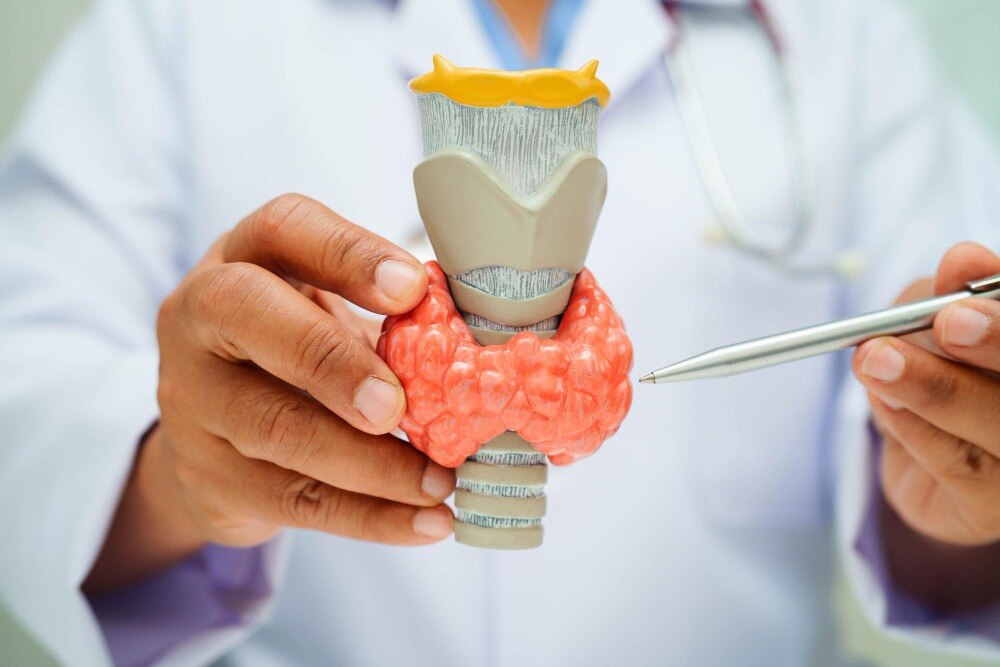
Fatigue, weight changes, constipation, palpitations, sweating, and menstrual changes can occur with thyroid disorders, but they also overlap with anaemia, diabetes, menopause, depression, medication effects, and sleep problems. Knowing the symptom patterns, warning thresholds, tests, and emergency signs helps you seek the right level of care without diagnosing yourself from a checklist.
Key takeaways
- Seek urgent care for severe palpitations, chest pain, fainting, or breathing difficulty.
- Arrange evaluation for a new neck lump, persistent symptoms, or voice and swallowing changes.
- TSH is usually the first thyroid blood test; free T4 helps clarify the result.
- Bring your medicines, supplements, symptoms, and menstrual history to the consultation.
Which symptoms suggest an underactive or overactive thyroid?
Hypothyroidism usually slows body functions: fatigue, feeling cold, weight gain, constipation, dry skin, hair loss, low mood, difficulty concentrating, a slower heart rate, heavy or irregular periods, and fertility problems. Hyperthyroidism usually speeds them up: unexplained weight loss, heat intolerance, sweating, tremor, anxiety, insomnia, palpitations, diarrhoea, and lighter or irregular periods.
| Pattern | Symptoms that fit | Why testing matters |
|---|---|---|
| Underactive thyroid | Fatigue, feeling cold, constipation, dry skin, weight gain | These symptoms also occur with anaemia, depression, sleep disorders, menopause, and medication effects. |
| Overactive thyroid | Palpitations, heat intolerance, sweating, tremor, weight loss, anxiety | Anxiety, stimulant use, heart rhythm disorders, infection, and some medicines can look similar. |
| Either pattern | Menstrual changes, hair loss, poor concentration, mood changes | Symptoms overlap, so they cannot identify the thyroid problem by themselves. |
Arrange thyroid testing when symptoms persist for several weeks, several symptoms appear together, weight changes have no clear explanation, or you develop ongoing palpitations. A clinician usually starts with thyroid-stimulating hormone (TSH) and free T4; results, medicines, pregnancy status, and examination findings determine what comes next.
Do not start thyroid medicine or iodine supplements from a symptom checklist.
Seek urgent assessment for palpitations with chest pain, fainting, severe breathlessness, confusion, or a very rapid or irregular heartbeat. Fever, marked agitation, vomiting, or collapse alongside suspected hyperthyroidism is an emergency.
If you are pregnant, planning pregnancy, recently postpartum, or taking levothyroxine, contact your clinician promptly rather than applying ordinary reference ranges or changing the dose yourself.
When should thyroid symptoms or a neck lump be medically evaluated?
Arrange a medical appointment if fatigue, temperature intolerance, bowel changes, menstrual changes, palpitations, or unexplained weight loss lasts two to three weeks, keeps worsening, or disrupts daily activities. Do not wait for symptoms to become severe.
| Situation | What to do | Why it matters |
|---|---|---|
| New neck lump | Arrange an appointment promptly | A lump is not automatically a thyroid disorder, but it could be a thyroid nodule, goitre, or another neck condition |
| Persistent hoarseness or swallowing difficulty | Seek assessment within days to weeks | Progressive voice or swallowing changes need examination |
| Unexplained weight loss or ongoing palpitations | Book an appointment soon | These symptoms can reflect thyroid disease or another condition requiring testing |
| Lump with normal thyroid symptoms or blood results | Still attend follow-up | Structural thyroid disease can exist with normal hormone levels |
Seek emergency care now if a neck swelling causes difficulty breathing, inability to swallow saliva, or rapidly worsens. Call emergency services for palpitations with chest pain, fainting, severe breathlessness, or a very irregular heartbeat.
Profound drowsiness, reduced consciousness, unusually low body temperature, slowed breathing, very low blood pressure, or a markedly slow pulse are also emergencies. These signs can occur in severe untreated hypothyroidism and need hospital care, not a routine appointment. A normal TSH does not explain every symptom, so persistent concerns still deserve clinical review.
What happens during a thyroid examination and which tests may be ordered?
A clinician examines your neck for thyroid enlargement, nodules, tenderness, and movement when you swallow. They may also check your pulse, reflexes, skin, hair, eyes, weight, and blood pressure, then review symptoms, medicines, pregnancy status, and family history.
| Test | What it helps determine | When it is used |
|---|---|---|
| TSH | Whether the pituitary is signalling the thyroid to make too little or too much hormone | Usually the starting blood test |
| Free T4 | The available thyroxine level in blood | Often measured when TSH is high or to confirm thyroid dysfunction |
| Free T3 | The available triiodothyronine level | Commonly added when TSH is low and overactive thyroid disease is suspected |
| Thyroid antibody tests | Whether autoimmunity supports Hashimoto’s disease or Graves’ disease | Ordered when the cause of abnormal thyroid function needs clarification |
| Ultrasound | A nodule’s size, number, solid or fluid-filled structure, and suspicious features | Used for a lump, goitre, or abnormal neck examination |
| Fine-needle aspiration | Whether cells from a thyroid nodule appear benign, suspicious, or malignant | Considered when ultrasound features and size warrant sampling |
A normal TSH does not exclude a thyroid nodule or other structural problem, and positive antibodies do not prove that current symptoms result from hormone imbalance. Reference ranges and test choices vary with age, pregnancy, the laboratory, and your clinical history.
How should you prepare for thyroid testing and consultation?
Prepare a complete medication and health history, not just a list of symptoms. Bring previous TSH, free T4, antibody, ultrasound, or biopsy reports; note when symptoms began, menstrual or fertility changes, recent weight change, family thyroid disease, and any neck swelling.
- List every prescription, over-the-counter medicine, vitamin, and supplement, with its dose and timing. Include levothyroxine and record missed doses or recent changes; do not stop or adjust it before testing unless your clinician instructs you.
- Tell both the clinician and laboratory about biotin use, including hair, skin, and nail products. Biotin and thyroid tests can produce misleading results, so ask whether to stop it; the American Thyroid Association has advised stopping biotin for at least two days before testing under clinician guidance.
- State clearly whether you are pregnant, recently postpartum, or planning to conceive. Pregnancy thyroid testing uses pregnancy-specific interpretation, and levothyroxine requirements often rise during pregnancy. Contact your treating clinician promptly after a positive test rather than changing the dose yourself.
- For a child, bring growth records, school or behaviour changes, constipation, fatigue, poor concentration, delayed puberty, or other children’s thyroid symptoms. Include the child’s medicines and supplements.
Ask which tests require fasting or morning timing. Laboratory ranges differ with age, pregnancy, and clinical context, so do not compare your result with an online range.
What should you do after abnormal or normal thyroid results?
Do not treat a laboratory flag as a diagnosis. Read TSH with free T4 or free T3, symptoms, medicines, examination findings, and the laboratory’s reference range. Positive thyroid antibodies can support Hashimoto’s or Graves’ disease, but they do not prove that thyroid hormone dysfunction is causing your symptoms.
| Result pattern | What it may mean | Next step |
|---|---|---|
| High TSH with low free T4 | Hypothyroidism is likely | Arrange medical review for treatment and cause |
| Low TSH with high free T4 or free T3 | Hyperthyroidism is likely | Seek prompt assessment, especially with palpitations |
| Normal TSH | Thyroid hormone regulation appears broadly normal | Investigate persistent symptoms or a neck lump rather than stopping there |
A normal TSH does not rule out a thyroid nodule, goitre, thyroiditis, or another structural problem. A lump can exist with normal hormone levels and may need examination, ultrasound, and fine-needle aspiration. Tiredness, hair loss, and weight change also have non-thyroid causes.
Arrange thyroid follow-up sooner if you are pregnant, planning pregnancy, or recently postpartum; pregnancy-specific targets apply. Report biotin use before repeat testing, and do not change levothyroxine without clinical advice.
For Pune thyroid evaluation, Dr Masal Hospital 08042755436 can help coordinate assessment; if considering Dr Priyanka Masal, confirm her current specialty and registration with the clinic before booking.
Related services
General Physician & Family Doctor Looking for a trusted General Physician in Pune for complete family healthcare? Dr Masal Hospital is known for reliable diagnosis, ethical treatment,... View service → |
Best Hospital for Medicine in Pune – Comprehensive Internal Care at Dr Masal Hospital When it comes to accurate diagnosis, effective treatment, and... View service → |
Frequently asked questions
Which symptoms suggest an underactive or overactive thyroid?
Hypothyroidism often causes fatigue, cold intolerance, weight gain, constipation, dry skin, hair loss, low mood, poor concentration, slow heart rate, heavy or irregular periods, and fertility problems. Hyperthyroidism often causes weight loss, heat intolerance, sweating, tremor, anxiety, insomnia, palpitations, diarrhoea, and lighter or irregular periods.
When should thyroid symptoms or a neck lump be medically evaluated?
Arrange a medical evaluation for persistent or worsening thyroid symptoms, a new or growing neck lump, hoarseness, difficulty swallowing, or breathing difficulty. Seek urgent care for chest pain, fainting, severe shortness of breath, or a very fast or irregular heartbeat.
What happens during a thyroid examination and which tests may be ordered?
A clinician reviews your symptoms, medicines, family history, menstrual or fertility concerns, and examines your neck and thyroid. Tests may include TSH and free T4, with thyroid antibodies, free T3, a thyroid ultrasound, or other investigations when the findings indicate them.
How should you prepare for thyroid testing and consultation?
Bring a list of medicines and supplements, including biotin, plus relevant previous reports. Record symptom onset, weight changes, heart-rate symptoms, menstrual changes, and family thyroid history. Ask whether you need to pause biotin or follow any special instructions before testing.
What should you do after abnormal or normal thyroid results?
Discuss abnormal results with your clinician before starting, stopping, or changing treatment. A normal result does not explain every symptom, so review persistent symptoms and ask whether repeat testing or evaluation for another cause is appropriate.
Keywords